We have come to the end of the Salt Marsh STEAM program with South Carolina’s Department of Natural Resources, Salt Marsh Consortium, Sea Grant, NOAA, Bobino (did I leave anyone out?). E.V. Bell and her co-workers put together an amazing week of learning, fun, community, and swag. Thank you all!
Today, each participating teacher presented his/her proposal for a project based on the Estuaries 101 curriculum and activities that we learned this week involving science, technology, engineering, art, and math (STEAM). I learned so many different, creative approaches to educating children about these ecosystems.
We had edible marshlands, iMovies, Bobinos (Arduino-based buoys), watercolors, poems and more. An English teacher teaching literature archetypes created a project where students would research animals and plants in the estuary and match that fauna or flora to a certain literary archetype. Students would then compose an origin myth about that particular organism and archetype. Another is having her students build a Bobino from PVC tubing and connectors and then monitor weather and water quality around Hilton Head Island.
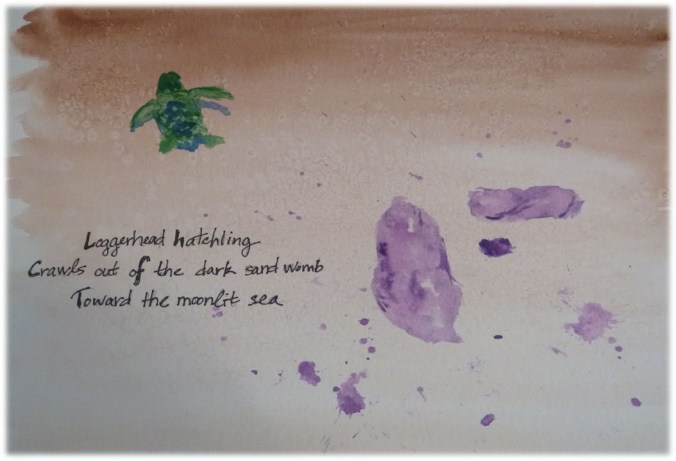
I will be using the Estuaries 101 curriculum to teach biology units all throughout this year. My particular presentation is on a poetry anthology that the students will complete based on the flora and fauna of the ACE basin and Hilton Head. The theme for the six-week cycle is systems, where we will study economies, systems of equations in algebra, ecosystems, and “systematic” poetry. Students will write a haiku, Shakespearean sonnet, ode, and sestina; all of these poetry types require the writer to use certain rules for topic, syllable count, meter, rhyme, and word count.
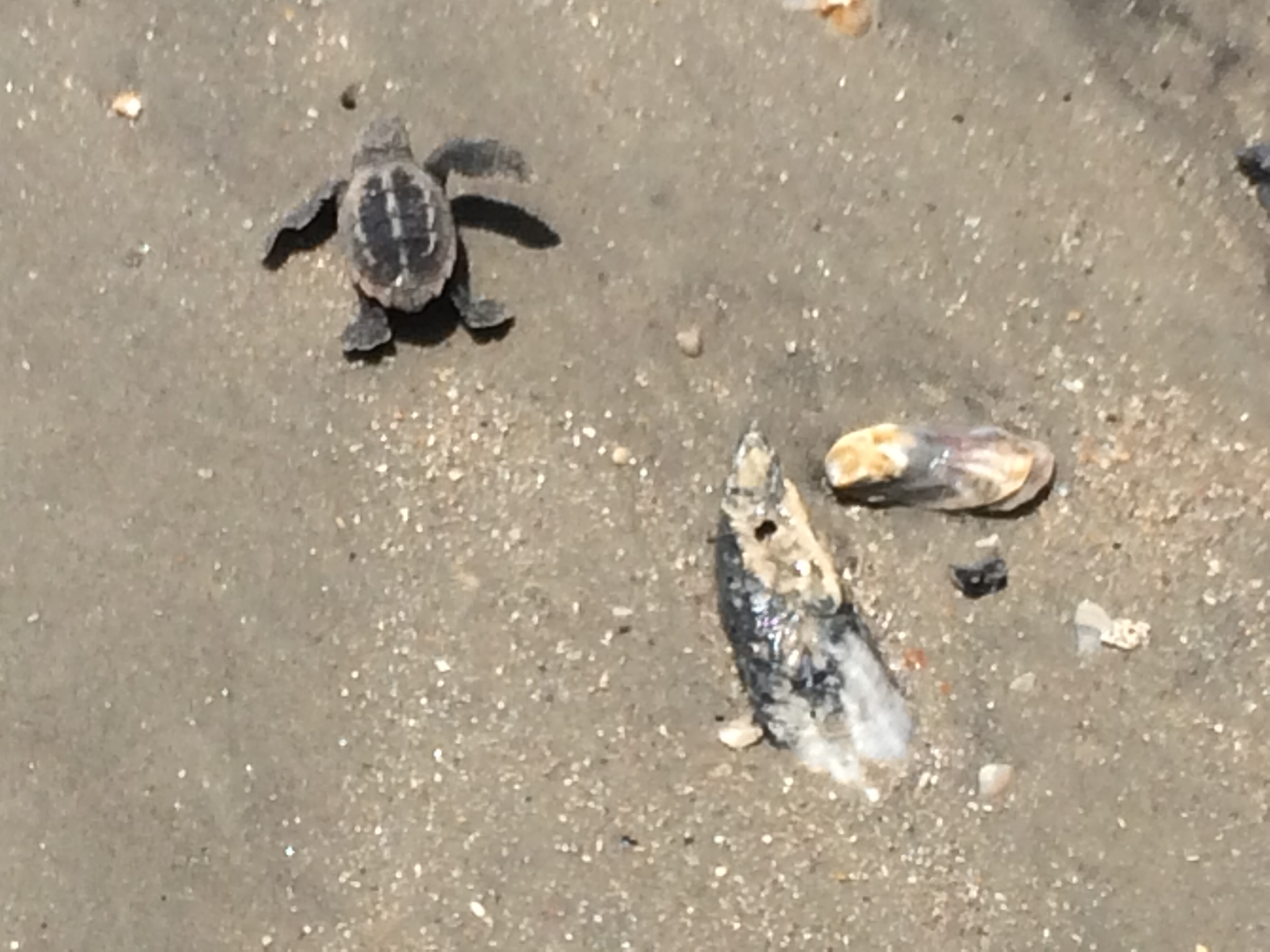
Then, students will create watercolors, photographs, or movies to illustrate their poetry. Finally, the teens will be required to write an essay where they explain their choice of topic and how that poetic structure fits with their topic. The anthologies will be compiled with cover page and presented.
I have enclosed a video slideshow to display my examples and SC state standards met by this activity.
Thank you STEAM friends. I had a lot of fun. Remember, Neptune’s Nest foreva!
–Sarah

 Sarah W Baird: Montessori Musings